Robot Delay: Tesla Pushes Optimus Launch to 2027
Tesla CEO Elon Musk acknowledges that hand durability and AI reliability are still hurdles, moving external deliveries to late 2027.
By Tunde Adeyemi ·
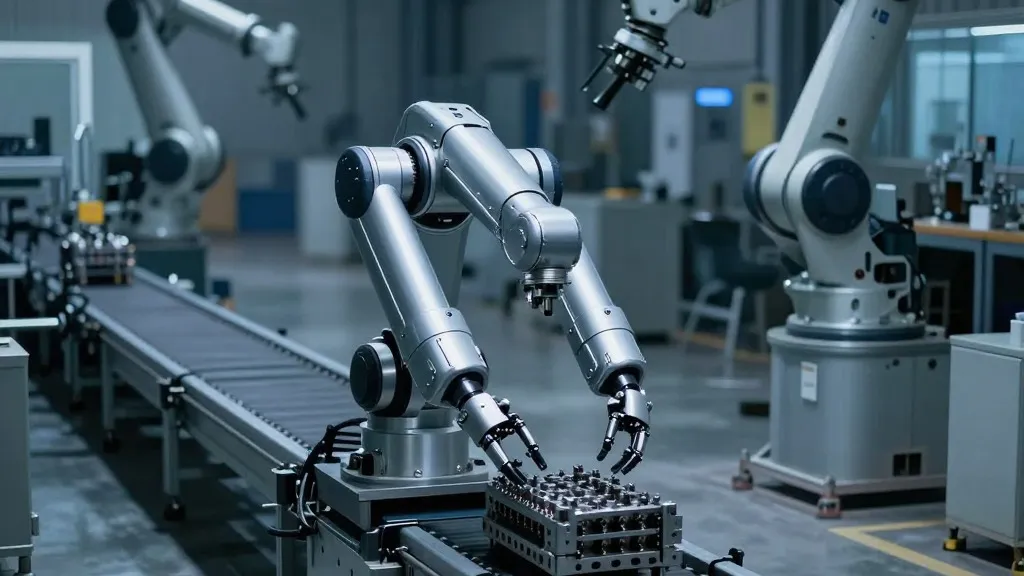
Tesla is no longer promising a near-term flood of humanoid robots. Instead, the company is pushing the start of external deliveries to the end of 2027. The delay stems from persistent issues with the robot’s hands, its overall durability, and its artificial intelligence capabilities.
On the third-quarter 2026 earnings call, Elon Musk outlined the remaining obstacles. He stated that the electromechanical design and reliability still require significant work. The goal is to ensure the robots do not wear out after just one month of use. Tesla expects to solve these core issues by the end of next year.
Production has shifted to the high-volume line in Fremont, California, where the Model S and Model X were previously built. Most of the infrastructure designed for one million robots per year is already installed. However, Musk noted that reaching a production rate of 20,000 units per week will take at least another year. Parts of the design are still in flux, which slows down the ramp-up process.
The hand remains the most difficult component. Tesla engineers identified it as a major hardware challenge, along with custom gears that have reliability concerns. Musk explained that the fingers must be soft enough to handle delicate objects yet tough enough to withstand constant wear. Unlike human skin, the robot cannot heal, making material durability a critical engineering problem.
On the software side, Tesla faces a data gap. The company does not have a massive fleet of robots collecting real-world data the way its cars do for full self-driving. To address this, Tesla plans to build 10,000 to 20,000 robots for an internal program called the Optimus Academy. These units will practice tasks to improve the AI architecture. The AI5 chip is also scheduled for integration around April 2027.
Musk claimed that no other company is close to matching Tesla’s progress on a general-purpose humanoid. However, competitors have shown steady movement. XPeng recently activated an automated production line in Guangzhou with over 80% of core processes automated. Their IRON robot features advanced hand dexterity and runs on in-house chips. XPeng aims for mass production by late 2026 and deliveries in early 2027.
Meanwhile, Boston Dynamics has begun producing its electric Atlas robot. The company stated that all 2026 deployments are already committed, including work with Google DeepMind. Boston Dynamics opened a training center at Hyundai’s Metaplant in Georgia, where Atlas is learning to sequence car parts. Hyundai plans to deploy 25,000 robots across its facilities in the coming years.
Tesla’s timeline has shifted multiple times in the past. In 2024, Musk predicted internal use in 2025 and high-volume external sales in 2026. Those targets did not materialize. The Q3 shareholder letter now describes the new robots from the Fremont line as the first production-quality units. This implies that previous iterations were not considered ready for widespread industrial use. The company has promised a video within the next two months showing Optimus performing unscripted tasks, but observers remain cautious given the history of slipping deadlines.
Source: Electrek