NASA's Moon Plan Hinges on 22 Starship Launches
A new internal estimate reveals that Artemis lunar missions may require more tanker flights than previously hoped, raising concerns about the program's timeline.
By Valentina Cruz ·
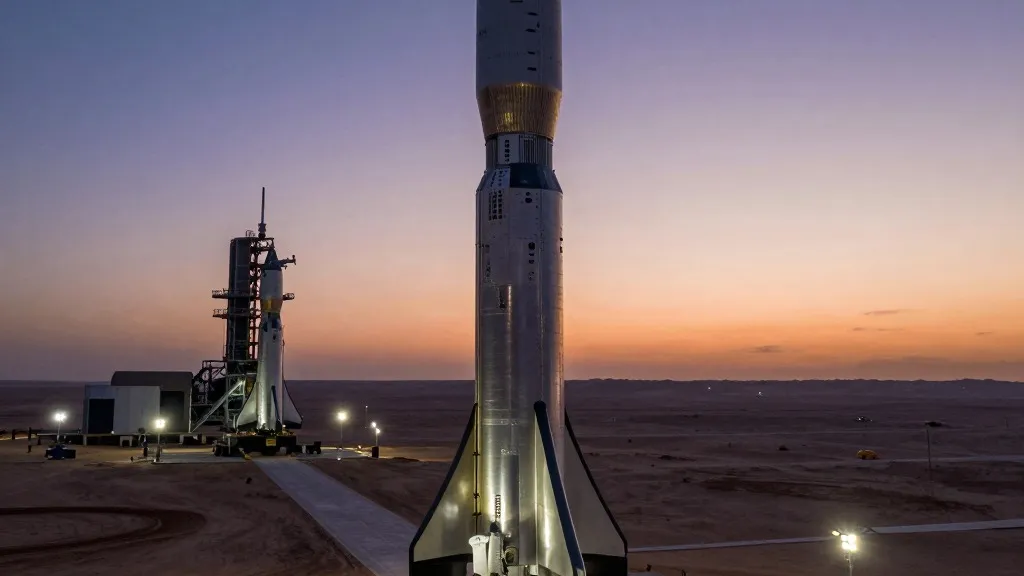
NASA has historically treated the number of rocket launches required to send a crewed spacecraft to the Moon with a level of secrecy usually reserved for classified defense codes. While the agency does not possess nuclear weapons, the specific metric detailing how many Starship vehicles must be flown to fuel a lunar lander in low-Earth orbit has remained elusive. The tension stems from the fact that this number directly dictates the feasibility of the Artemis Program, and for years, officials have avoided giving a definitive answer, preferring to state that they are still working through the calculations.
The uncertainty has centered on the logistics of propellant transfer. A lunar lander requires massive quantities of liquid oxygen and methane to travel from Earth to the Moon, land, and return. This fuel must be accumulated in space via a complex process involving a "depot" Starship and multiple "tanker" Starships that fly up to refill it. The challenge is that the number of tankers required depends entirely on the lift capacity of the rockets, a variable that has shifted as SpaceX develops the vehicle.
Over the past few years, estimates have fluctuated significantly. In 2023, Lisa Watson-Morgan, then-director of NASA’s Human Landing System, told Ars Technica that while the agency had a general idea, she was reluctant to specify the exact figure. She later described the requirement as being in the "high single digits to the low double digits," which would imply approximately a dozen launches. Other NASA officials have at various points cited figures in the "high teens," suggesting a more demanding logistical operation.
The hope among agency leadership has been that SpaceX would significantly increase the payload capacity of Starship, thereby reducing the number of tanker flights needed. However, internal concerns are growing that this improvement may not arrive soon enough to allow the rocket to play a meaningful role in returning humans to the Moon within the current decade. This delay threatens to complicate the ambitious timeline set for the Artemis campaign.
On Thursday, the NASA Aerospace Safety Advisory Panel held its quarterly meeting, providing a rare window into these internal calculations. During the session, panel member Charlie Precourt, a former NASA astronaut, discussed the risks associated with the Artemis Program and the specific challenges of landing humans on the lunar surface. His remarks highlighted the ongoing scrutiny of the program's safety margins and logistical dependencies.
The stakes extend beyond mere engineering metrics. The number of launches required translates directly into cost, risk, and schedule pressure. If the estimate holds near the newly suggested figure of 22, the operation becomes a massive logistical undertaking, requiring a sustained high-cadence launch campaign. This places immense strain on both SpaceX’s production lines and NASA’s budget, while simultaneously increasing the probability of failure in the critical propellant transfer operations that must succeed before a crew can attempt the journey to the Moon.
Source: Ars Technica