Chinatown Group Agrees to Buy Former Empress of China Building for Arts and Culture Center
A coalition of nonprofits has reached a deal to purchase the six-story landmark at 838 Grant Ave. for $32 million, ending a dispute with its owner that lasted nearly a decade.
By Mei Ling ·
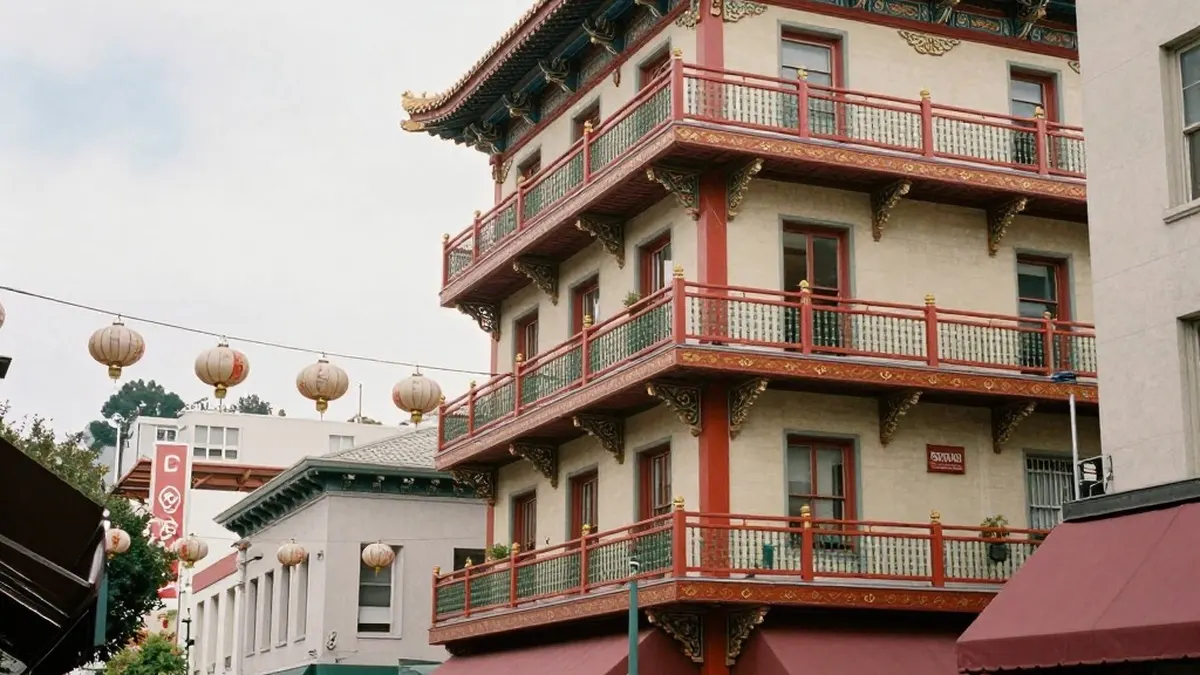
One of the most recognizable buildings in San Francisco's Chinatown is set to be sold to a community group that plans to turn it into a center for Asian American arts, culture and history. According to sources, the Chinatown Media & Arts Collaborative, a coalition of nonprofits, has agreed to buy the six-story property at 838 Grant Ave.
The building was the longtime home of the Empress of China restaurant, which closed in 2014 after nearly 50 years in business. Public documents filed Wednesday put the sale price at $32 million. The current owner, private real estate investor John Yee, paid $17.25 million for the property in 2016. Yee could not be reached for comment, and the collaborative, known as CMAC, declined to comment.
The pending sale brings an end to a standoff of nearly a decade between CMAC's activists and Yee, who had long declined to sell or to support the group's goal of creating a cultural center. Yee reportedly once offered to sell portions of the building, but community groups turned that proposal down. In the meantime, CMAC bought the neighboring property at 800 Grant Ave.
In its heyday, the Empress of China was known for its grand banquet hall and sweeping views of Chinatown and Telegraph Hill. Sammy Davis Jr., Chuck Norris, Mick Jagger and Lamar Odom were all photographed dining there. Since the restaurant's closure, the building has kept a low profile. Two restaurants have opened on the top and ground floors in recent years, and fewer than a dozen office tenants occupy the middle floors.
Activists and nonprofit leaders have long imagined turning the landmark into a museum and workspace for community organizations. An earlier push for a Bruce Lee-themed martial arts center dates to the tenure of Mayor Ed Lee, but his death in 2017 derailed those plans. Yee and various developers tried over the years to reopen the vacant spaces as restaurants, and CMAC's backers opposed them at nearly every step. Even so, Ho Chee Boon opened the fine-dining restaurant Empress by Boon on the top floor in 2021, followed two years later by the dim sum restaurant City View. Sources say both will stay open at least through their current leases.
Relations between the two sides began to thaw in 2024, when the Rose Pak Community Fund, led by many people involved with CMAC, held its annual event at the building. CMAC's flagship program, Edge on the Square, has also staged an annual contemporary art festival there aimed at revitalizing Chinatown. The property comes with a conditional grant stipulating that CMAC may use it only as a public cultural destination.
CMAC will need to raise tens of millions of dollars to build out the space and begin programming. Sources familiar with the group's plans say the long-term vision is to connect 838 Grant Ave. with other Chinatown sites into a network of cultural spaces resembling a campus. CMAC received $26 million from the state in 2021, and some sister organizations already occupy buildings on Grant, Ross and Clay streets.
Former Assemblymember Phil Ting, who helped fund the purchase of 800 Grant Ave. while serving as budget chair, called the deal a major victory. "It's really about owning our future, owning our own destiny, and being able to tell our stories," he said.
Fundraising could prove difficult. San Francisco's Mexican Museum has struggled to raise money to renovate a condo tower, putting a public grant at risk. CMAC's nine-member board includes former Supervisor Mabel Teng, Stephen Gong, Vincent Pan, Malcolm Yeung, political consultant David Ho and Jay Xu, the former director of the Asian Art Museum.
Source: The San Francisco Standard